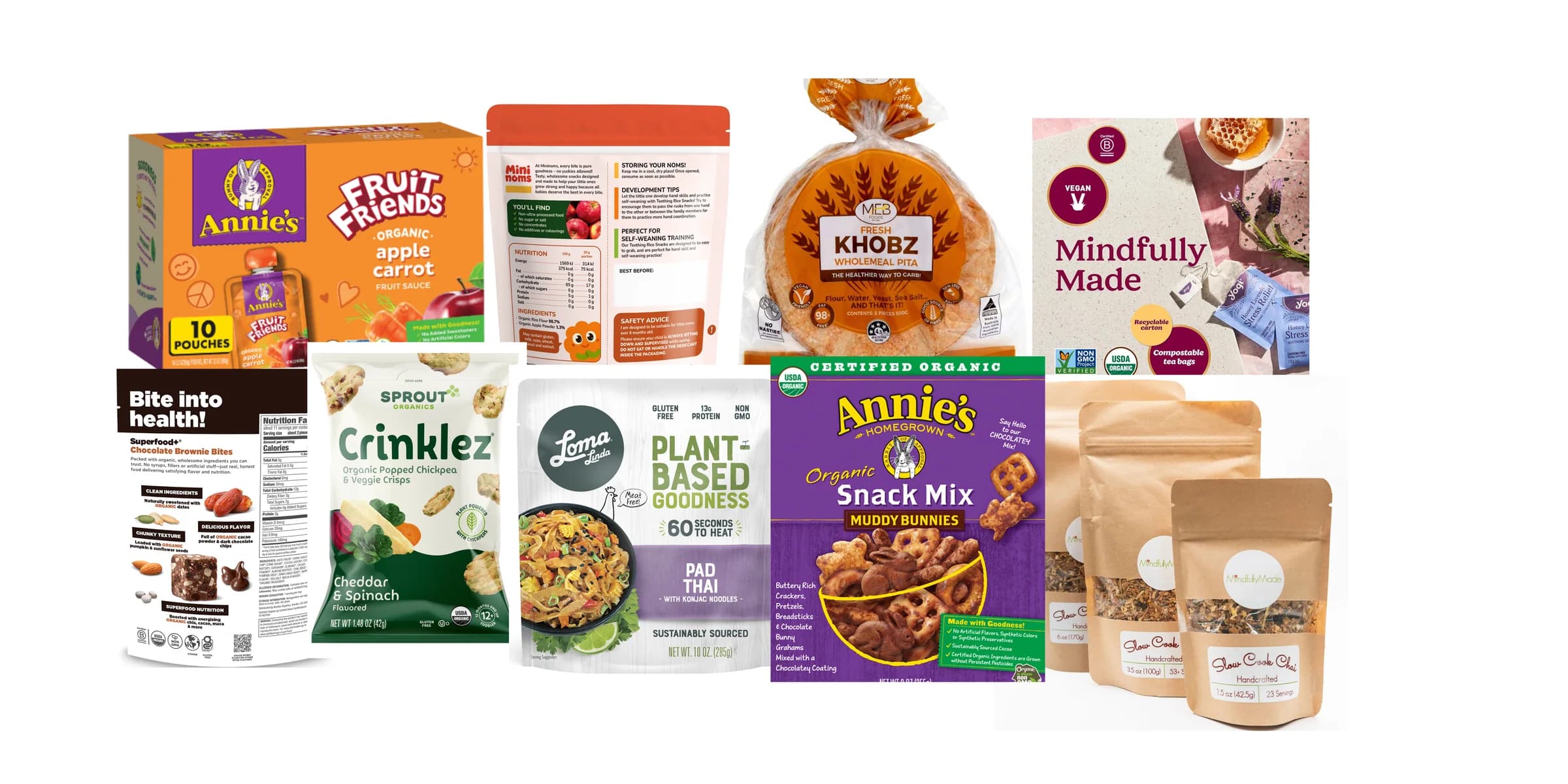
This is Part II of the series. In Part I, we looked at how front-of-package language creates a health halo and can influence the way we judge the whole product.
Words Found on Food Packages
I checked the expressions below against real products or historical packaging records. None has a generally applicable nutritional threshold comparable with regulated claims such as low sugar or high fibre. They still cannot legally be false or misleading, and rules can vary by country and by food category.
Words that create a health or wellbeing feeling
Clean / clean ingredients
There is no standard nutrition profile that makes a food “clean.” The word may refer to a short ingredient list, selected ingredients or simply the brand's own philosophy.
Wholesome
This word is commonly used on cereals, snacks and children's foods. Wholesome has a positive meaning, but it does not specify any amount of fibre, sugar, salt or other nutrient.
Wholesome goodness
This wording is used as a general product description. Neither wholesome nor goodness explains which measurable quality is being promised.
Made with goodness
The smaller statements near this phrase may contain factual information, but goodness itself has no nutritional definition.
Simple goodness
This creates an impression of simplicity and quality, but it is promotional language rather than a nutritional standard.
Guilt-free / guilt-free snacking
This phrase appears on snack products in several countries. No nutrient value makes a food objectively “guilt-free.” Food is not a moral test, and guilt is not nutrition information.
No nasties
Unless the package separately names what has been excluded, nasties tells us nothing. It is not a scientific or nutritional category.
Real ingredients
All ingredients are real substances. The phrase does not explain whether a product is nutritious or how processed it is.
Mindfully made
It sounds careful and responsible, but it does not describe a standard production method or nutrition profile.
Feel-good food
This wording appears in prepared-food and snack marketing. The feeling belongs to the message; it is not a measurable property of the food.
Plant-powered
This phrase appears on snacks and meat alternatives. It may draw attention to plant ingredients, but it does not tell us their proportion or make the product nutritionally balanced.
Made with love
This expression appears on small and large food brands, including granola and confectionery packages. It communicates a story about care, not information that can be checked in the nutrition declaration.
Words that create a quality or craftsmanship feeling
Artisan / artisanal
The word is used on breads, crackers, cheeses, chocolates and crisps, including packaged “artisan” snack ranges. It does not consistently tell us who made the food, how much was produced or which method was used.
Crafted
Crafted appears across soups, snacks, drinks and ready meals. Without a description of the process, it mainly adds a feeling of care and craftsmanship.
Handcrafted
This word can appear on products made in commercial facilities as well as genuinely small-scale products. The package should explain what was done by hand if that distinction matters to you.
Crafted with care
This language is used on commercially packaged foods, but care cannot be compared between two products.
Homestyle
The word suggests familiarity and home cooking, but it does not identify a recipe, method or nutritional quality shared by all “homestyle” foods.
Homemade taste
This wording is also used for commercial soups, sauces, biscuits and ready meals. It promises an impression of flavour, not that the food was made in someone's home.
Premium
Premium is common on chocolate, ice cream, coffee, snacks and ready meals. Unless the manufacturer explains the comparison, the word does not tell us which ingredient or process is superior.
Gourmet
Packaged popcorn, sauces, sweets and frozen foods have long used gourmet. It suggests sophistication, but there is no general nutrition standard for gourmet food.
Chef-inspired
This appears on ready meals, sauces and soups, including commercially packaged meal ranges. It does not necessarily mean that a chef prepared the product or that it is nutritionally different from another ready meal.
Authentic
Meal kits, sauces and international ready meals frequently use authentic. Authenticity is cultural and contextual; the word alone does not establish the origin, recipe or quality of a product.
Signature
Signature is used on packaged soups, sauces, desserts and supermarket ranges. It normally identifies a manufacturer's selected recipe or product line, not an independently assessed level of quality.
Finest / select
Supermarket ranges and packaged foods use these words to position products above a standard range. They may indicate the company's own selection, but there is no universal scale on which one product becomes the “finest.”
The important point is not that every food using one of these words is a poor choice. It is that the words do not establish nutritional quality. In Part III, we will look at expressions that are more complicated because they may communicate something factual or fall under nutrition, health or flavouring rules.