This is Part III of the series. In Part II, we examined undefined promotional words that create an impression of health, quality or craftsmanship without establishing the nutritional value of a product.
Other Common Expressions That Need a Second Question
Some expressions are too important to leave out of this discussion, but they should not be placed in exactly the same category as premium or guilt-free. They can communicate something factual, or they can fall under nutrition, health or flavouring rules. The problem is usually not that they say absolutely nothing. The problem is that shoppers may understand much more from them than the words actually promise.
Made with real fruit
This tells us that the product contains some fruit or fruit-derived ingredient, but it does not tell us how much. A fruit snack can contain fruit purée or concentrate and still be very different from a portion of fruit. More specific wording, such as made with fruit purée, gives us somewhat more information, but it still does not tell us the amount.
The useful follow-up question is: How much fruit does it contain, and in what form? Check the ingredient list instead of relying on fruit pictures or the front-of-package phrase.
Fruit-flavoured
Fruit-flavoured describes the expected taste. It does not necessarily mean that the flavour comes from that fruit or that the product contains a meaningful amount of fruit. Flavour descriptions and the use of natural for flavourings are regulated. In the EU, for example, a named natural flavour generally has to meet specific source requirements.
The useful question is: Is this telling me about flavour, or about ingredients? They are not the same thing.
Naturally sweetened
This may mean that sweetness comes from ingredients such as fruit, dates, honey or syrup rather than a particular sweetener the brand wants to avoid. It does not mean sugar-free, and sugars from these ingredients still count as sugars. The exact wording can also interact with rules for nutrition claims and with general rules against misleading labels.
The useful question is: What provides the sweetness, and how much total sugar is in the product?
Refined sugar-free
This phrase can make a product sound as though it contains no sugar, while it may still contain honey, syrups, date paste, concentrated juice or other sources of free sugars. In the EU, wording that has the same meaning for consumers as no added sugar may have to satisfy the legal conditions for that claim. It is therefore not a consequence-free marketing phrase.
The useful question is: Does it contain other added sweetening ingredients, and what does the nutrition declaration show for total sugars?
Detox
Detox is not a nutrient measurement. On a conventional food or drink, however, it may imply a physiological or health effect. In the EU, that can bring it under health-claim rules. A company cannot avoid those rules simply by choosing a fashionable word.
The useful question is: Which substance is supposed to produce which effect, and is that exact health claim authorised and supported?
Immune support
This is a health claim, not just decorative language. Some nutrients have authorised claims relating to the normal function of the immune system when the product meets the relevant conditions. That does not mean that every product using immune imagery or broad immunity language has been shown to prevent illness.
The useful question is: Which nutrient is responsible for the claim, does the product provide the required amount, and what is the exact authorised wording?
Keto-friendly
There is no single internationally agreed definition of a keto-friendly food. The phrase usually suggests compatibility with a ketogenic diet, but products may calculate or present carbohydrates differently. In the EU it may also imply a carbohydrate-related nutrition claim that is not on the authorised list, depending on the presentation. This makes the expression legally more complicated than premium or artisan.
The useful question is: How many grams of total carbohydrate does it contain, what is the serving size, and what has been subtracted to calculate any advertised “net carbs”?
Multigrain
Multigrain normally means that more than one type of grain is present. It does not mean whole grain. A bread can contain several refined grains and still be accurately called multigrain.
The useful question is: Are the grains whole grains, and where do they appear in the ingredient list?
Farm fresh
This phrase creates an image of freshness, short supply chains and minimal processing, but the package may not explain the farm, harvest date or route to the supermarket. The word fresh can also be specifically controlled for certain foods and in certain jurisdictions, so the exact use matters.
The useful question is: What fact about the product does “farm fresh” describe? Origin and date information are more useful than the picture it creates.
Words I deliberately left out of the undefined list
I left out low carb because it is not an authorised nutrition claim in the European Union, and the US Food and Drug Administration has not defined a lawful threshold for a low-carbohydrate nutrient-content claim. It belongs in a discussion about restricted or potentially unauthorised claims, not in a list of harmless marketing words.
I also left out low sugar, sugar-free, no added sugar, low fat, high protein, source of fibre, light, organic and gluten-free because these expressions are legally defined or controlled.
I have discussed made with real fruit, fruit-flavoured, naturally sweetened, refined sugar-free, detox, immune support, keto-friendly, multigrain and farm fresh separately above. They remain part of the article, but not part of the list of undefined promotional descriptions.
I still left out chemical-free and paleo-friendly. Chemical-free is scientifically incoherent and may become a false absence claim. Paleo-friendly has no official nutritional definition, but it is primarily a statement about compatibility with a particular dietary pattern and may be supported by private certification. Both need more careful treatment than this article can give them.
Even natural and all natural need their own article. The FDA does not have a formal general definition of natural for food labelling, but it has a longstanding policy about what it considers the term to mean. In the EU and in particular food categories, uses of natural are also affected by specific rules. It is vague, but it is not simple enough to place carelessly in this list.
What should we look at instead?
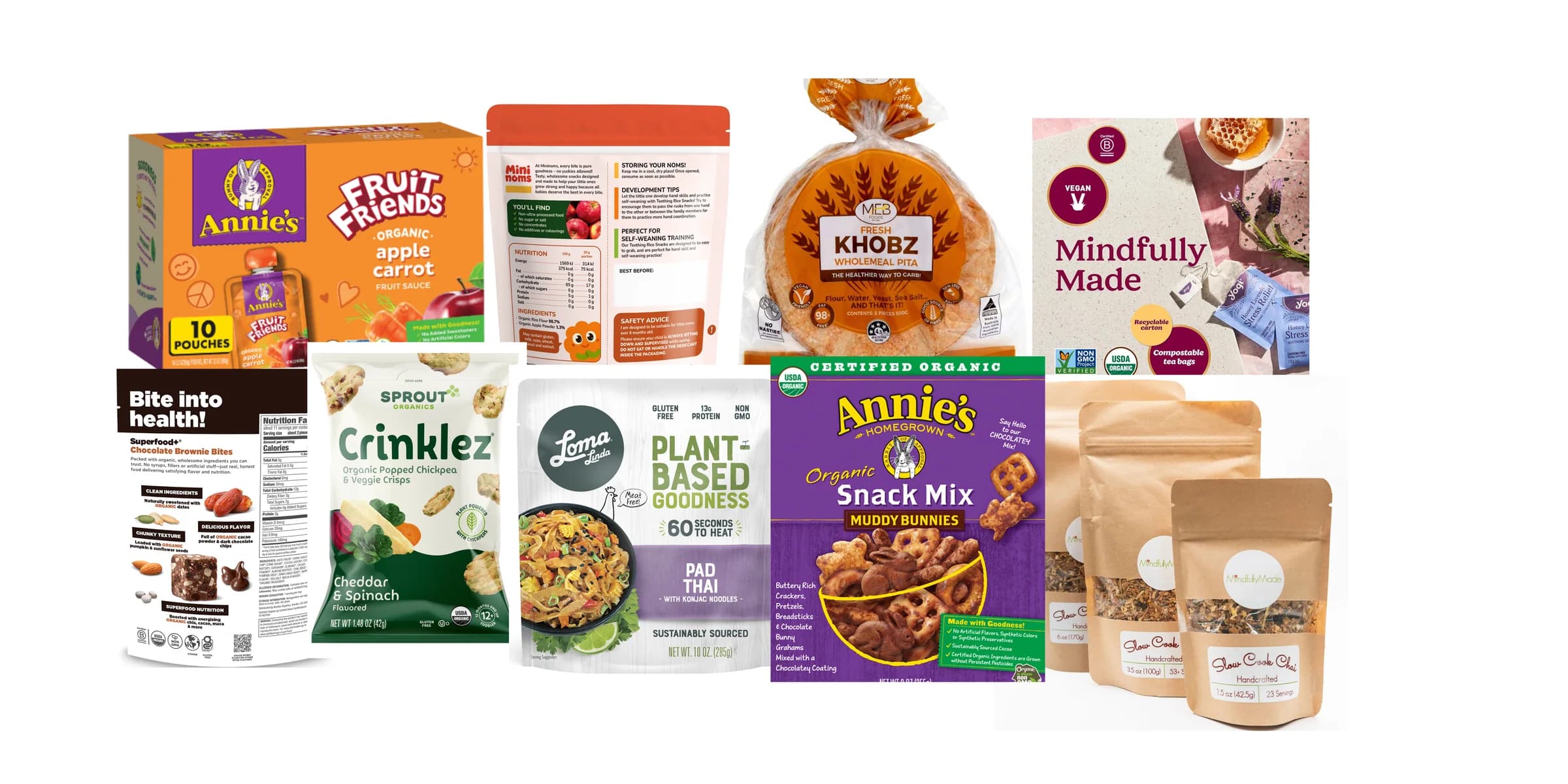
The front of a package is useful for recognising a product, but the more informative details are usually elsewhere.
I first check the name of the food and the ingredient list. Ingredients are listed by weight, so this gives us an idea of what makes up most of the product. Then I check the nutrition declaration, preferably per 100 grams or 100 millilitres when I want to compare two products. Depending on the food, I may look at fibre, protein, saturated fat, sugar or salt. There is no single number that decides whether every food is a good choice.
Context matters too. A chocolate does not need to pretend to be a wellness product for us to enjoy it. A snack described as guilt-free is not automatically more nutritious than one without that phrase. And an artisan biscuit is still a biscuit, which is perfectly fine.
The purpose of reading a label is not to become suspicious of every product or to find the most perfect food. It is simply to separate information from atmosphere. The package can tell us a beautiful story, but the ingredient list and nutrition declaration tell us much more about what we are actually buying.
Sources
- European Parliament and Council. Regulation (EC) No 1924/2006 on nutrition and health claims made on foods.
- US Food and Drug Administration. Use of the Term Natural on Food Labeling.
- Musicus AA et al. (2025). The Relationship Between Fruit Drink Front-of-Package Claims, Fruit Imagery, and Ingredient Disclosures and Consumer Perceptions, Intentions, and Behavior: A Systematic Review. PMID: 39894077.
- Kelly B et al. (2024). The Potential Effectiveness of Nutrient Declarations and Nutrition and Health Claims for Improving Population Diets. PMID: 38857539.